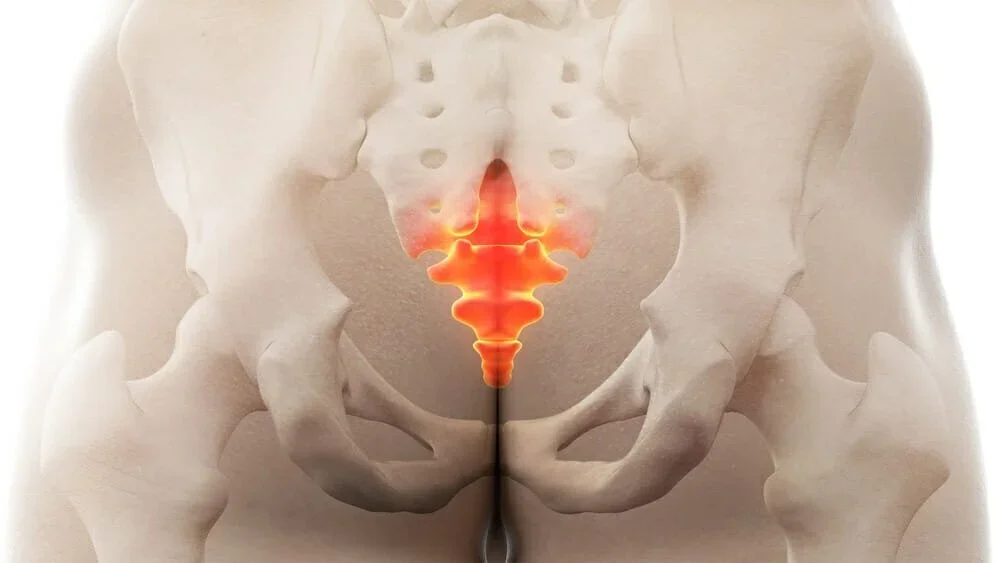
If you had a baby and now can't sit through a meal, a car ride, or a nursing session without wincing, you're not imagining it — and you're not alone. Tailbone pain after childbirth is common, but that doesn't mean you have to just wait it out.
Why Childbirth Affects the Tailbone
During vaginal delivery, the coccyx (tailbone) has to move out of the way to make room for the baby to pass through the pelvis. In most deliveries, it flexes and returns to its normal position without lasting issue. But in some cases:
The coccyx is bruised or strained from the pressure of delivery
It becomes excessively mobile or shifts out of alignment
In rarer cases, it fractures or dislocates
The surrounding pelvic floor muscles tighten and guard in response to labor, referring pain to the tailbone even when the bone itself is fine
That last point is one people miss most often. Postpartum tailbone pain isn't always about the tailbone — it's frequently about the pelvic floor muscles that attach around it.
What's Normal in the First Few Weeks
Some tenderness and discomfort sitting during the first two to six weeks postpartum is common as tissues heal. Ice, supportive cushions, and avoiding long stretches of sitting on hard surfaces can help in this early window.
When It's Worth Getting Evaluated
Consider a pelvic floor physical therapy evaluation if:
Tailbone pain is still significant beyond six to eight weeks postpartum
Sitting pain is getting worse rather than better
You notice pain radiating into the hips, low back, or with bowel movements
Standing up from sitting is sharply painful
You feel like something "shifted" during delivery and hasn't felt right since
These aren't signs to push through — they're signs a proper evaluation can identify what's actually going on and get you on a faster path to relief.
What a Pelvic Floor Evaluation Looks At
A thorough postpartum tailbone assessment considers the coccyx itself, but also:
Pelvic floor muscle tone and symmetry
Scar tissue from delivery (including perineal or C-section scarring, which can refer tension to the pelvic floor)
Sitting posture and weight-bearing patterns
Core and hip strength as they relate to pelvic support
Treatment is typically hands-on and gradual — manual therapy, guided breathing and relaxation work for the pelvic floor, scar mobilization when appropriate, and a return-to-activity plan that doesn't aggravate the area.
The Bottom Line
Tailbone pain after childbirth is common, but "common" doesn't mean you have to live with it for months. If it's not improving on its own, a pelvic floor physical therapy evaluation can pinpoint the cause and get you moving — and sitting — comfortably again.
Learn more about tailbone pain and coccydynia treatment at Sharp Ortho & Pelvic Physical Therapy, or call 205-515-0258 to schedule an evaluation.
Sharp Ortho & Pelvic Physical Therapy Kaye Sharp, MPT, WHC | 2481 Valleydale Rd, Hoover, AL 35244 | 205-515-0258 | sharpphysicaltherapy.com