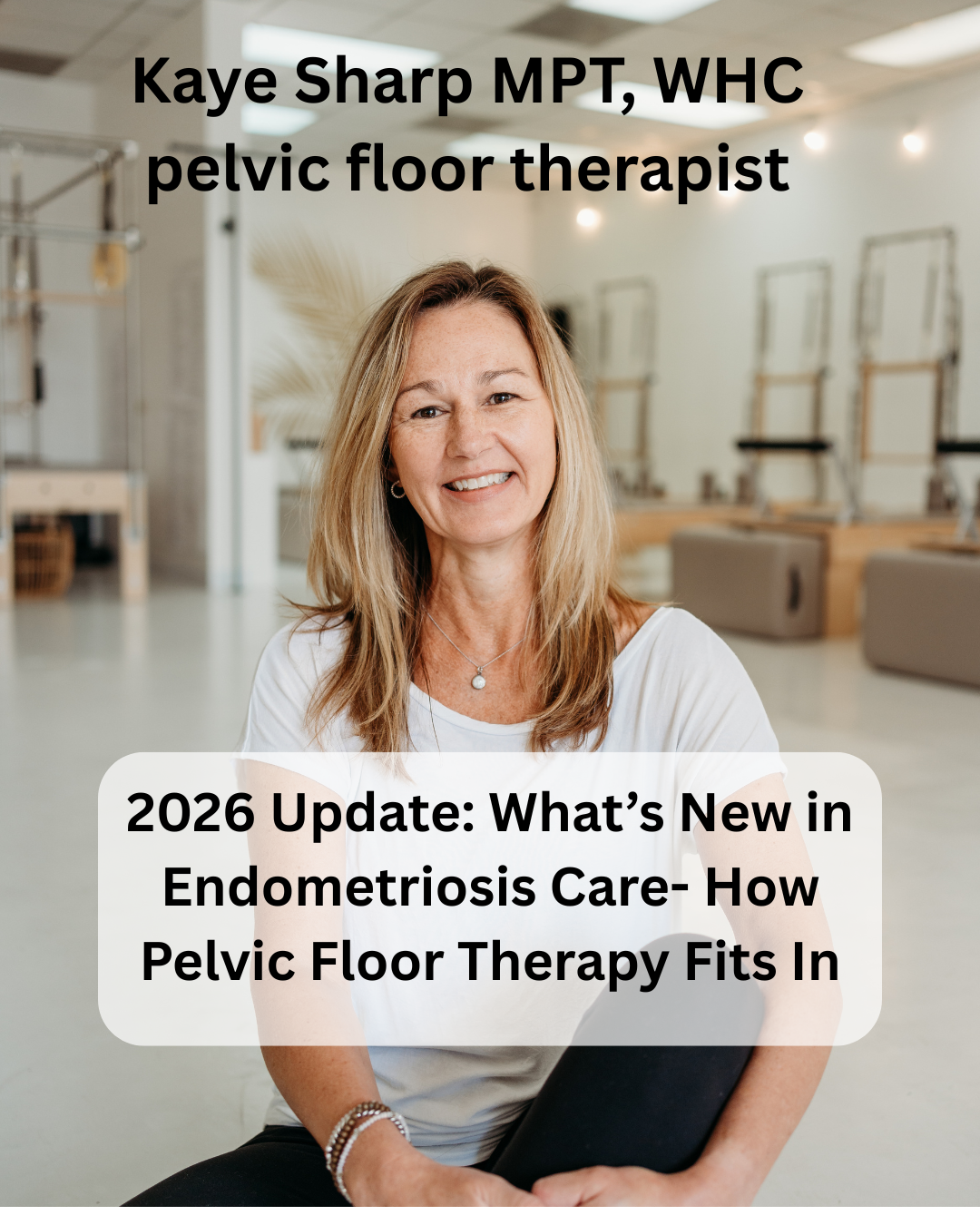
Endometriosis in 2026: What's New in Diagnosis, Treatment — and Where Pelvic Floor Therapy Fits In
Endometriosis affects roughly 1 in 10 women of reproductive age, yet it still takes years — often 7 to 10 — for many women to get an accurate diagnosis. The good news: 2026 has brought real movement on this front, from faster diagnostic pathways to new non-hormonal treatments in the pipeline. Here's what's current, what hasn't changed, and how pelvic floor physical therapy fits into your care team either way.
What Is Endometriosis?
Endometriosis occurs when tissue similar to the uterine lining grows outside the uterus — on the ovaries, fallopian tubes, bowel, bladder, or other pelvic structures. This tissue responds to hormonal cycles just like the uterine lining does, but it has nowhere to go, leading to inflammation, scar tissue, and adhesions.
Common Symptoms
Severe pelvic pain, especially during periods
Pain during or after sex
Pain with bowel movements or urination, particularly during menstruation
Heavy or irregular bleeding
Fatigue
Infertility or difficulty conceiving
Bloating or GI symptoms sometimes mistaken for IBS
Importantly, the severity of pain doesn't always correlate with how much endometrial tissue is present — some women with extensive disease have minimal pain, while others with small amounts have debilitating symptoms.
What's New: Faster Diagnosis
For years, laparoscopic surgery was considered the only way to definitively diagnose endometriosis, which contributed heavily to diagnostic delays. That's shifting. Updated guidance now supports diagnosing endometriosis based on clinical findings and imaging tests, with earlier treatment initiation when appropriate. The American College of Obstetricians and Gynecologists now states that a clinical diagnosis made through symptom-based assessment, physical examination, or both is sufficient to begin medical treatment, with diagnostic laparoscopy reserved as a confirming step rather than a mandatory first step.
In practice, this means women may no longer need to wait for surgery to start getting treated — a meaningful shift toward reducing the diagnostic delay that has plagued this condition for decades.
What's New: Precision Medicine on the Horizon
Most people diagnosed with endometriosis are first treated with progesterone-based birth control, but roughly a third of patients don't respond to this therapy, while others discontinue it due to side effects. Researchers at Yale have been working on biomarker-based testing designed to help predict which patients will respond to which treatments, aiming to reduce the trial-and-error many women currently experience.
What's New: Non-Hormonal Treatment in the Pipeline
Historically, treatment options have centered on hormonal suppression (birth control, GnRH agonists) or surgery. That's starting to diversify. The FDA has cleared an Investigational New Drug application for a first-in-class, non-hormonal targeted peptide therapeutic designed specifically to address endometriosis lesions and associated symptoms. This treatment is entering early-phase clinical trials, so it's not available yet — but it represents a meaningful shift toward treatment options that don't rely on suppressing the reproductive hormone cycle altogether.
What Hasn't Changed: The Role of the Pelvic Floor
Here's what all of this new research doesn't address directly, and where I come in as a pelvic floor physical therapist: chronic pelvic pain changes the muscles around it.
When the pelvis experiences ongoing inflammation and pain signaling from endometriosis, the pelvic floor muscles often respond by guarding — tightening protectively, the same way your shoulders might creep up toward your ears during a stressful week. Over time, that guarding pattern can become its own independent source of pain, separate from (but layered on top of) the underlying endometriosis.
This is why some women continue to experience pelvic pain, pain with intercourse, or bladder and bowel symptoms even after surgical excision or hormonal treatment has addressed the endometrial tissue itself. The muscles learned a pattern, and that pattern doesn't always resolve on its own.
How Pelvic Floor Therapy Helps
Down-training overactive muscles — manual therapy and targeted exercises to release chronically guarded pelvic floor muscles
Addressing pain with intercourse — a common and under-discussed endometriosis symptom that responds well to pelvic floor treatment
Bladder and bowel retraining — for the urgency, frequency, or constipation patterns that often accompany endometriosis
Scar tissue mobilization — after laparoscopic or excision surgery, to reduce adhesion-related restriction
Whole-body strategies — breathing patterns, posture, and nervous system regulation that influence how the pelvic floor holds tension
Pelvic floor therapy isn't a replacement for medical or surgical management of endometriosis — it works best as part of a coordinated care team alongside your OB-GYN, and a reproductive endocrinologist or excision specialist when needed. But it directly addresses the muscular piece of the puzzle that medication and surgery alone often can't fully resolve.
If You Suspect Endometriosis
If you're dealing with pelvic pain, painful periods, or pain with intercourse that's affecting your daily life, you don't need to wait years for a diagnosis, and you don't need to navigate it alone. Start a conversation with your OB-GYN about your symptoms, and consider a pelvic floor evaluation to address the muscular component that so often accompanies this condition.
Ready to talk about your pelvic pain? Contact Sharp Ortho & Pelvic Physical Therapy at 205-515-0258 or visit sharpphysicaltherapy.com to schedule an evaluation.
This post is for educational purposes and is not a substitute for individualized medical advice. Please consult your physician regarding diagnosis and treatment of endometriosis.