Pelvic Pain

5 Things That Make Tailbone Pain Worse (and What Helps Instead)

If your tailbone pain seems to flare with certain activities and ease with others, you're picking up on real patterns — coccydynia is very sensitive to daily habits. Here are five of the most common culprits, and what to do instead.

1. Sitting on Hard, Flat Surfaces

Hard chairs, bleachers, and car seats put direct pressure right on the coccyx, especially if you tend to sit leaned back.

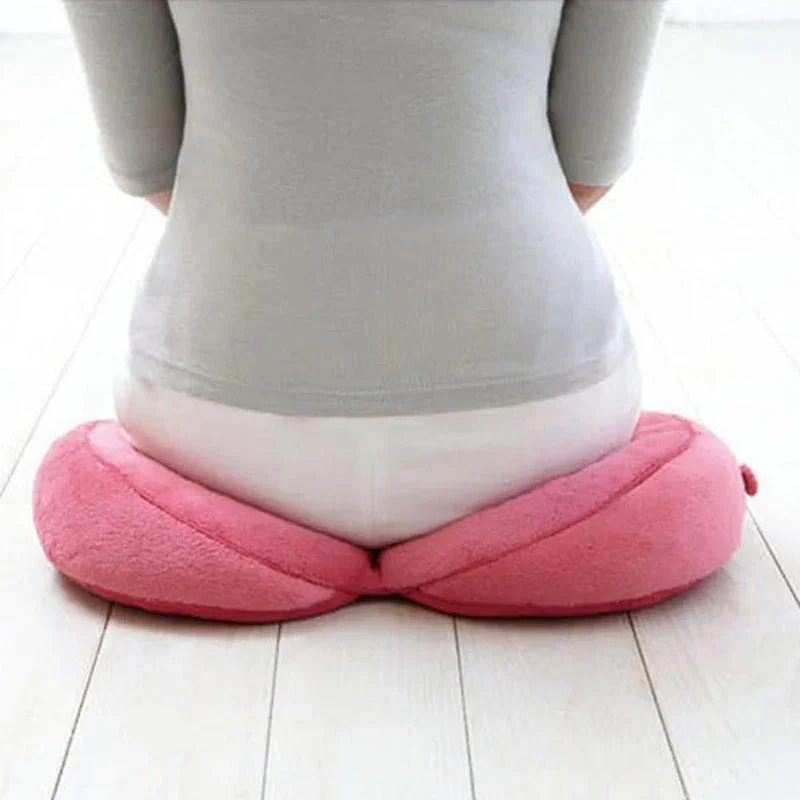
Instead: Use a cushion with a cutout or "U" shape at the back — not a standard donut cushion, which can actually increase pressure around the tailbone rather than relieving it. Sit slightly forward with your weight on your sit bones rather than leaning back.

2. Slouched Sitting Posture

Slumping shifts your pelvis into a position that tilts the tailbone directly into the seat, increasing pressure exactly where it hurts most.

Instead: Sit with a slight forward pelvic tilt, shoulders stacked over hips, and feet flat on the floor. A small lumbar support can help maintain this without you having to consciously hold it all day.

3. Prolonged Sitting Without Breaks

Even good posture becomes a problem if it's held for hours without movement. Tissue around the coccyx doesn't like sustained compression.

Instead: Stand or shift position every 30–45 minutes. Short walks or simply standing to work for a few minutes can meaningfully reduce flare-ups over the course of a day.

4. Constipation and Straining

Straining during bowel movements increases pressure through the pelvic floor and can directly aggravate coccyx pain, especially if the pelvic floor muscles are already tense.

Instead: Stay well hydrated, prioritize fiber, and consider a footstool to elevate your knees above your hips while on the toilet — this position reduces straining and pelvic floor tension.

5. Avoiding All Movement Out of Fear

It's a natural instinct to move as little as possible when something hurts, but staying still can allow the surrounding muscles to stiffen and guard further, prolonging the problem.

Instead: Gentle, guided movement — not necessarily targeting the tailbone directly — helps keep the pelvic floor and hips from becoming more restricted. This is exactly where a personalized physical therapy program makes the difference between "resting it" and actually healing it.

The Common Thread

Most of these factors have one thing in common: they all put pressure or tension on the pelvic floor, not just the tailbone bone itself. That's why home remedies like cushions and posture tweaks can help but rarely resolve the pain completely — the muscles around the coccyx usually need direct, hands-on treatment to fully calm down.

If you've tried the cushion, the posture fixes, and the breaks from sitting, and you're still hurting, that's a sign it's time for a proper evaluation rather than another home remedy.

Learn more about tailbone pain and coccydynia treatment at Sharp Ortho & Pelvic Physical Therapy, or call 205-515-0258 to schedule an evaluation.

Sharp Ortho & Pelvic Physical Therapy Kaye Sharp, MPT, WHC | 2481 Valleydale Rd, Hoover, AL 35244 | 205-515-0258 | sharpphysicaltherapy.com

Tailbone Pain vs. Lower Back Pain: How to Tell the Difference

"My back hurts" can mean a lot of different things — and one of the most commonly confused (and mistreated) pain patterns is tailbone pain that gets lumped in with general low back pain. They're not the same condition, and treating one like the other usually means treatment that doesn't work.

## Where the Pain Actually Is

**Tailbone pain (coccydynia)** is felt at the very base of the spine — the small, pointed bone you can feel if you press just above where your glutes meet. It's typically:

- Sharp or localized directly at the tailbone

- Worse with direct sitting pressure, especially on hard surfaces

- Aggravated by leaning back while seated

- Often painful when standing up from sitting

- Sometimes worse during bowel movements

**Lower back pain** is felt higher up, across the lumbar spine and often into the hips or buttocks. It's typically:

- Broader and less localized

- Worse with bending, lifting, or twisting

- Often accompanied by stiffness in the morning

- Sometimes radiating down one or both legs (which tailbone pain rarely does)

## Why the Distinction Matters

Lower back pain is frequently addressed with core strengthening, spinal mobility work, and general postural correction. While that approach can be part of a coccydynia treatment plan too, it misses the piece that actually resolves most tailbone pain: the pelvic floor.

The muscles and ligaments that attach to the coccyx are part of the pelvic floor, not the lumbar spine. If those muscles are tight, guarded, or imbalanced — from an old injury, childbirth, prolonged sitting, or postural habits — general back exercises won't touch the source of the pain, and can sometimes aggravate it.

## Can You Have Both at Once?

Yes, and it's fairly common. Pelvic floor tension and lumbar spine dysfunction often develop together, especially after pregnancy, prolonged sitting jobs, or a fall. This is exactly why a thorough evaluation matters — treating only the back when the tailbone is the real driver (or vice versa) leaves you stuck in a cycle of partial relief.

## How to Know Which One You're Dealing With

A few quick self-check questions:

- Does pressing directly on your tailbone reproduce the pain? → Points toward coccydynia

- Is the pain worse with bending or lifting rather than sitting? → Points toward lumbar back pain

- Does pain radiate down your leg? → More typical of lumbar spine involvement

- Is standing up from a chair the worst part of your day? → Common with coccydynia

These are starting points, not a diagnosis — an in-person evaluation is the most reliable way to know for sure.

## Getting the Right Evaluation

A pelvic floor physical therapist is trained to assess both the coccyx and the surrounding pelvic floor musculature — something general orthopedic back treatment typically doesn't include. If your "back pain" isn't responding to standard treatment, it may be worth asking whether the tailbone, not the lumbar spine, is the actual source.

*Learn more about tailbone pain and coccydynia treatment at Sharp Ortho & Pelvic Physical Therapy, or call 205-515-0258 to schedule an evaluation.*

---

**Sharp Ortho & Pelvic Physical Therapy**

Kaye Sharp, MPT, WHC | 2481 Valleydale Rd, Hoover, AL 35244 | 205-515-0258 | sharpphysicaltherapy.com

Pelvic Floor Therapy in Hoover, AL: What Women in Birmingham Should Know

Pelvic Floor PT in Hoover, AL: What Women in Birmingham Should Know | Sharp PT Blog

Pelvic Floor PT in Hoover, AL: What Women in Birmingham Should Know

Every week, women come into my Hoover clinic having waited years — sometimes more than a decade — to address a pelvic floor problem they assumed was just part of life. Leaking when they sneeze. Rushing to the bathroom with no warning. Pelvic pressure they've been ignoring since their last delivery. This guide is for every woman in the Birmingham area who has wondered whether pelvic floor physical therapy might help her — and hasn't yet had someone explain it clearly.

What Is Pelvic Floor Physical Therapy?

The pelvic floor is a group of muscles, connective tissue, and nerves that form the base of your pelvis. Like any muscle group in your body, it can become too weak, too tight, uncoordinated, or injured — and when it does, it affects bladder control, bowel function, pelvic comfort, sexual health, and core stability.

Pelvic floor physical therapy is specialized, hands-on PT that evaluates and treats dysfunction in these muscles and the structures connected to them. It is evidence-based, individualized, and — I say this because women often worry — not painful.

Important: Pelvic floor PT is not just Kegel exercises. A thorough evaluation first determines whether your pelvic floor is weak, tight, or uncoordinated — because the treatment for each is completely different. Many women with incontinence actually have an overactive, too-tight pelvic floor, and Kegels make it worse.

What Does Pelvic Floor PT Treat?

Women in the Hoover and Birmingham area seek pelvic floor PT for a wide range of conditions. These are among the most common I see in my clinic:

Stress urinary incontinence
Urge incontinence
Mixed incontinence
Pelvic organ prolapse
Pelvic pain & pressure
Painful intercourse (dyspareunia)
Vaginismus
Postpartum recovery
Diastasis recti
Interstitial cystitis
Bladder urgency & frequency
Menopause pelvic changes

Many of these conditions overlap — a woman dealing with postpartum recovery may also have diastasis recti, some urinary leakage, and pelvic pain. A comprehensive evaluation looks at all of it together, not as isolated complaints.

Who Should See a Pelvic Floor PT?

One of the most common things I hear is: "I didn't know physical therapy could help with this." Pelvic floor PT is appropriate for women across the entire lifespan — not just postpartum women, and not just older women.

You may benefit from pelvic floor PT if you:

  • Leak urine when you sneeze, cough, laugh, jump, or exercise
  • Feel a sudden, urgent need to get to the bathroom and sometimes don't make it
  • Experience heaviness or pressure in your pelvis — especially at the end of the day or after standing
  • Have pain with intercourse or penetration
  • Are postpartum and haven't had a formal pelvic assessment
  • Are in perimenopause or menopause and noticing new bladder, pelvic, or sexual symptoms
  • Have chronic low back, hip, or tailbone pain that hasn't fully resolved
  • Are preparing for or recovering from pelvic or abdominal surgery

If you recognize yourself in any of those descriptions, pelvic floor PT is worth a conversation. You do not need to be "bad enough" to seek care. Earlier intervention consistently leads to better outcomes — and shorter treatment courses.

What Happens at Your First Visit?

A first pelvic floor PT appointment at my Hoover clinic typically runs 60–75 minutes. Here's what to expect:

1
Comprehensive health history
We discuss your symptoms, medical history, obstetric history, lifestyle, and goals. Context matters enormously in pelvic health — I want to understand your whole picture, not just the chief complaint.
2
Orthopedic assessment
Your posture, movement patterns, hip mobility, lumbar spine, and sacroiliac joint are evaluated. The pelvic floor doesn't exist in isolation — it is part of an interconnected system.
3
Pelvic floor evaluation
With your full, informed consent, this includes external assessment of pelvic floor function and, when appropriate, an internal exam to evaluate muscle tone, strength, coordination, and any trigger points or scar tissue.
4
Your personalized plan
You leave the first visit with a clear explanation of what we found, what is driving your symptoms, and a specific treatment plan. No vague instructions. No generic handouts.

Do You Need a Doctor's Referral?

No. Alabama is a direct access state for physical therapy, which means you can schedule an evaluation at Sharp Ortho & Pelvic PT without a physician's referral. You call, you schedule, you come in.

That said, some insurance plans do require a referral for coverage — so it's worth calling your insurance provider before your first visit to confirm your specific plan's requirements. I'm also happy to coordinate with your OB-GYN, midwife, or primary care provider if you prefer that collaborative approach.

Is Pelvic Floor PT Covered by Insurance?

Many insurance plans cover pelvic floor physical therapy when it is medically necessary — which, for most of the conditions listed above, it is. Coverage varies by plan, so I recommend calling the member services number on your insurance card and asking specifically about "pelvic floor physical therapy" and "women's health PT."

I also offer transparent cash-pay options for patients who prefer to bypass insurance. Call my office and we can walk through what makes sense for your situation.

Why Women Across Birmingham Choose Sharp PT in Hoover

There are PT clinics throughout the Birmingham metro area. What brings women specifically to my Valleydale Road clinic is the depth of specialization — and the fact that you will always work directly with me, not an aide or a rotating provider.

With 30 years of orthopedic physical therapy experience and a Women's Health Coach credential from the Integrative Women's Health Institute, I bring a perspective that goes beyond treating a symptom in isolation. Pelvic floor dysfunction in a 45-year-old woman in perimenopause looks entirely different from the same symptom in a 28-year-old six weeks postpartum. The evaluation, the treatment, and the goals are different — and should be treated that way.

Women come from Hoover, Vestavia Hills, Mountain Brook, Homewood, Pelham, and throughout the Birmingham area. If you've been looking for a pelvic floor specialist in Alabama, I'd love to talk.

Sharp Ortho & Pelvic Physical Therapy · 2481 Valleydale Road, Hoover, AL 35244
205-515-0258 · sharpphysicaltherapy.com
This content is for informational purposes only and does not constitute medical advice. Consult a qualified healthcare provider for diagnosis and treatment.

What is Pelvic Misalignment?

Pelvic misalignment happens when the pelvis becomes tilted and /or rotated in an abnormal way. The pelvis is made of two separate bones that are joined together in the front by the symphysis pubis joint and in the back by the sacrum via the SI (sacroiliac) joints. These structures move as the hips and spine move. This movement is important during pregnancy to make plenty of room for baby. If the pelvis becomes abnormally aligned, it can cause symptoms such has:

  • Constant dull lower back ache, even while laying down

  • Hip pain especially after walking

  • Pelvic floor pain

  • Muscle tension in the lower back and neck

  • Pain in the shoulders, buttock, and neck

  • Foot pain

  • Unbalanced gait (walking)

What causes the pelvis to become misaligned? Pregnancy, chronic muscle imbalances, leg length discrepancy, and certain types of trauma can all be causes. In pregnancy, oftentimes the baby is rotated in one direction which places unequal weight on the lower portion on the pelvis. This causes increased stress on the already tightened structures as the baby grows. During birth, the pelvis widens for the baby and should return to its normal resting place in the weeks following childbirth. Many times this doesn’t happen…. and mom may not have symptoms until the 2nd pregnancy:( YIKES!

How can you get your pelvis back into alignment? First, you need a full evaluation by a skilled physical therapist to determine what structures are involved. The bones of the pelvis need to be realigned and corrective exercises prescribed to maintain the correct alignment. Eventually, progressing toward strengthening the pelvic girdle to ensure proper stability and mobility.

Remember, it is impossible to diagnose your own pelvic asymmetry. If you have symptoms then get evaluated to prevent further injury and pain!

Give it a try!

Kaye