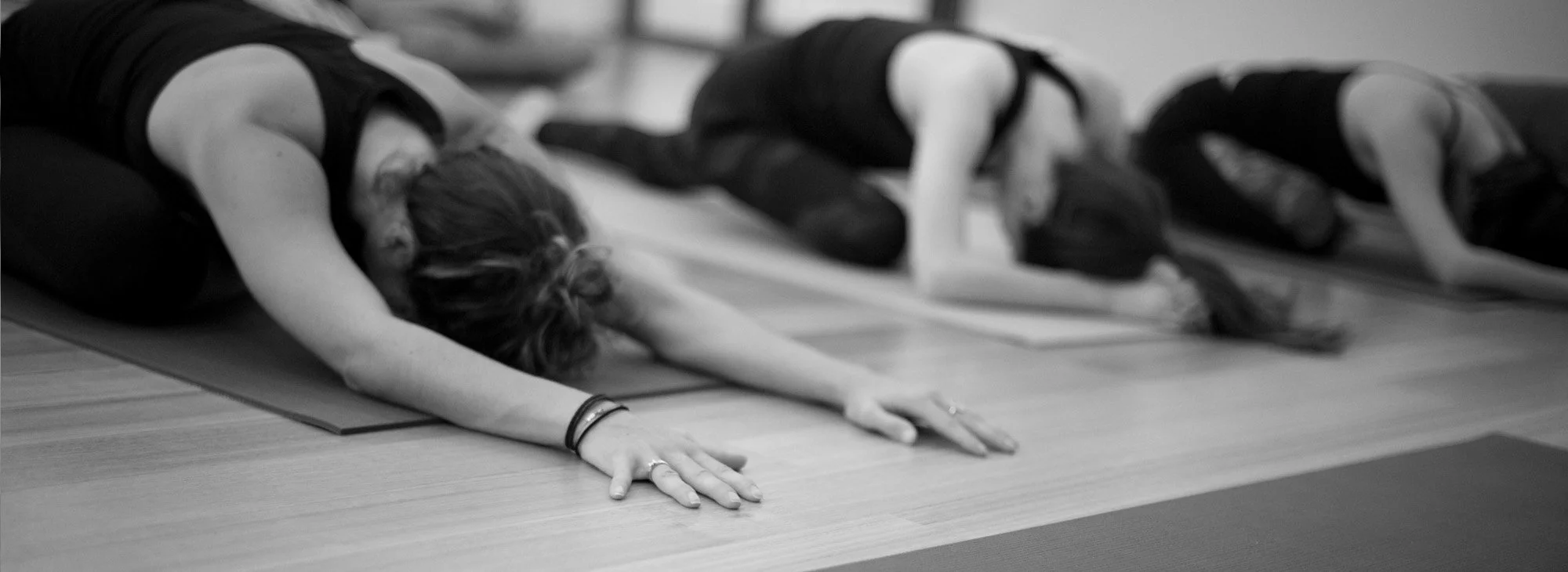
10 Benefits of Yoga
for Your Pelvic Floor
How mindful movement supports bladder, bowel, core, and sexual health across every stage of a woman's life.
The pelvic floor is a group of muscles, ligaments, and connective tissues that form the base of your core — supporting your bladder, bowel, uterus, and spine. When these muscles are too tight, too weak, or poorly coordinated, the effects ripple out into every area of life. Yoga, practiced mindfully, is one of the most powerful tools we have for restoring pelvic floor health. Here's why.
Breath-focused yoga helps you consciously tune into, activate, and release your pelvic floor muscles — many of which are chronically held tight without your awareness. This interoceptive connection is the foundation of all pelvic floor rehabilitation.
Poses like deep squat (Malasana) and Happy Baby gently stretch the pelvic floor, counteracting the tension patterns common with chronic stress, pain, or trauma. A pelvic floor that can fully lengthen is just as important as one that can contract.
Poses like Warrior and Bridge activate the glutes, deep core, and pelvic floor together — building integrated, real-world strength that isolated Kegel exercises alone cannot provide. This is how your body actually functions in daily life.
Yoga teaches diaphragmatic breathing and breath-movement coordination, which reduces the downward pressure on your pelvic floor during daily activities like lifting, coughing, sneezing, or exercising. This is essential for preventing and healing prolapse and incontinence.
Restorative poses and parasympathetic (rest-and-digest) activation can ease urinary urgency, frequency, and constipation by calming the nervous system and releasing pelvic tension. For many women, bladder symptoms are a nervous system problem as much as a muscle problem.
By reducing pelvic floor tension and improving body awareness and nervous system regulation, yoga can support improved arousal, lubrication, and reduced pain with intercourse (dyspareunia) — particularly important during and after menopause.
Mindful movement and nervous system downregulation through yoga help interrupt the pain-tension-guarding cycle that is common in pelvic floor dysfunction, endometriosis, interstitial cystitis, and chronic pelvic pain conditions.
Yoga reinforces the synergy between your diaphragm, deep abdominals (transverse abdominis), pelvic floor, and multifidus — the four pillars of inner core function that protect your spine, pelvis, and hips.
The parasympathetic activation from yoga — especially restorative and yin styles — directly reduces the pelvic floor guarding driven by chronic stress, anxiety, or unresolved trauma. You cannot heal a nervous-system-driven pelvic floor without addressing the nervous system.
For perimenopausal and postmenopausal women, yoga helps manage cortisol, supports restorative sleep, and mitigates the pelvic floor changes associated with declining estrogen — including tissue thinning, reduced elasticity, and increased bladder sensitivity.
The Bottom Line
Yoga is not a replacement for pelvic floor physical therapy — but it is one of the most powerful complements to it. When practiced with awareness and proper breath mechanics, yoga can transform your relationship with your pelvic floor, your body, and your symptoms.
Ready to Get Started?
Book a one-on-one session with Kaye Sharp, MPT, WHC. With 30 years of experience in orthopedic and pelvic floor PT, Kaye will create a personalized plan that integrates movement, breath, and yoga to support your healing.
Book Your Session →