Fix Your Tech Neck Part 2: 4 Simple Moves (laying down)

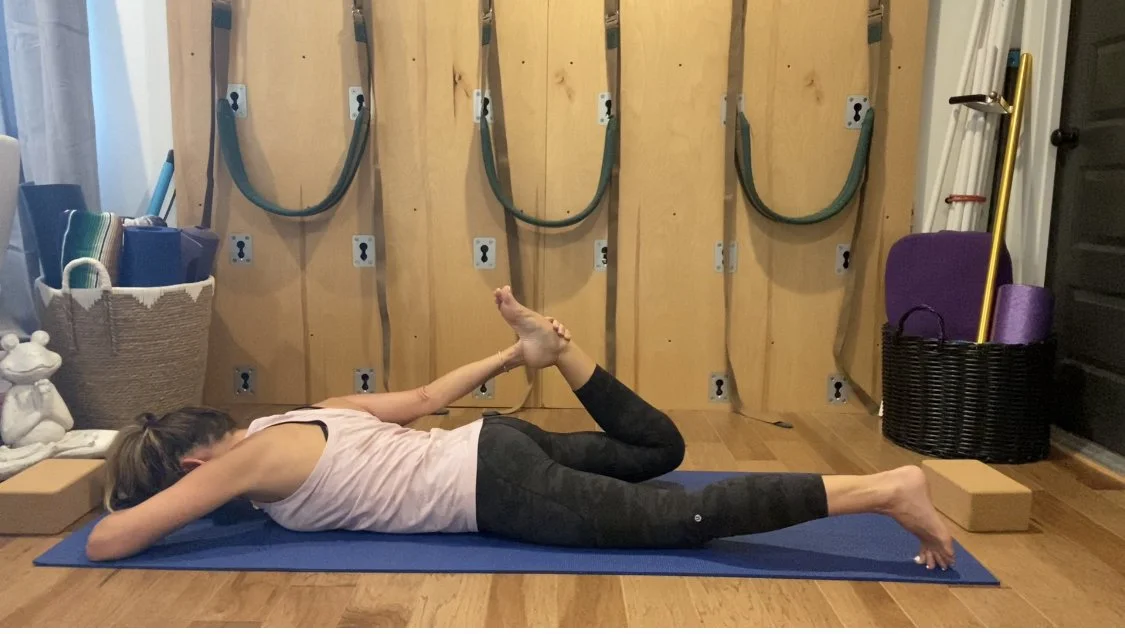
This is a follow up to Fix Your Tech Neck Part 1… moving on to neck stabilization exercises laying down. Try the sitting exercises in Part 1 first, starting out with 3 times per day. This will help to reduce tension on the structures in the back of the neck and reactive muscles for support. If you experience increased numbness or tingling in the arms or hands then you need further evaluation from a PT (call me). Perform these 4 simple exercises laying down in the morning and evening for best results.

Give it a try!

Fix Your Tech Neck Part 1: 4 Simple Moves (Sitting)

Tech Neck - also referred to as Text Neck- is the same name for an old issue: neck pain caused by repetitive strain from looking down at your cell phone, computer, or tablet. How do you know if you have Tech Neck? Check out these symptoms:

  • Pain in the back of the neck with looking down

  • Increasing neck stiffness that gets worse as the day goes on

  • Pain or discomfort that reaches into the shoulder blades

  • Tension headaches

  • Possible numbness and tingling in the arms and/or hands

  • Tightness in the front of the neck and shoulders (slumped posture)

  • Feeling like your head is heavy and needs more and more support

How does Tech Neck happen? When the head is pointed down (flexion) the weight of the cranium increases tension on the muscles, tendons, ligaments, and joints in the spine. Since a normal head weights approximately 10-12 pounds, the stress on these structures becomes more than the body can tolerated so the muscles have to elongate past their resting length. The muscles in the front of the neck become shortened and weak as a result. Over time, this can lead to impingement of the nerves going down the arm and causes more severe symptoms including numbness and tingling.

How can you fix Tech Neck? Stop looking down at your phone, computer, or tablet for hours on end. Make sure your device screen is at eye level, limit sitting for long periods of time, and do these simple sitting exercises 3 times per day. If your pain and symptoms persist, manual therapy and dry needling may be needed to get you back to baseline.

Give it a try!

PS- Try these 4 simple moves laying down for even more Tech Neck relief!

Shoulder Stability: 4 Simple Moves

Improving shoulder stability is KEY for preventing injuries …. especially as we age. The shoulder is very susceptible to overuse injuries because of the multiple attachments to the supporting tendons and ligaments. It is a multi-planar joint (meaning= it moves in ALL the directions)… much like the hip joint. Unfortunately, the shoulder sacrifices stability for mobility. This allows you to reach up into an overhead cabinet, reach back behind the body to scratch your back, and reach out to side to grab your purse from the back seat. When these movements become painful and/or limited = YOU HAVE A STABILITY PROBLEM!

The 4 muscles of the rotator cuff provide much of the stability for the shoulder joint (along with the deltoid and other muscles attached to the humerus). When these muscles are neglected or overused, we lose stability and, eventually, mobility suffers. Most of the time we don’t even realize the problem until the shoulder starts to hurt :( YIKES!

Over time, the structures providing support for the shoulder can become overused and inflamed causing pain and issues like:

  • impingement

  • bursitis

  • rotator cuff tears

  • labral tears

  • subluxation

  • bone spurs

  • adhesive capsulitis

This inflammation can be made worse by repetitive motions like tennis, golf, lifting weights overhead, baseball, or any other activity using the upper extremities. Posture also plays a major roll in shoulder health because it can cause fraying of the rotator cuff tendons and pressure on the bursa.

Injuries can be preventing by adding a few easy stability exercises to your warm up. These stability exercises focus on rotator cuff strengthening, increasing synovial fluid, and improving blood flow to the shoulder joint. All you need is a light to medium weight resistance band and about 5 minutes! Remember… the rotator cuff muscles are considered to be “postural muscles” and they respond best to low weight/ high repetition exercises. Perform these daily - add them to your current warm up program to keep your shoulders healthy and happy!!

Give it a try!

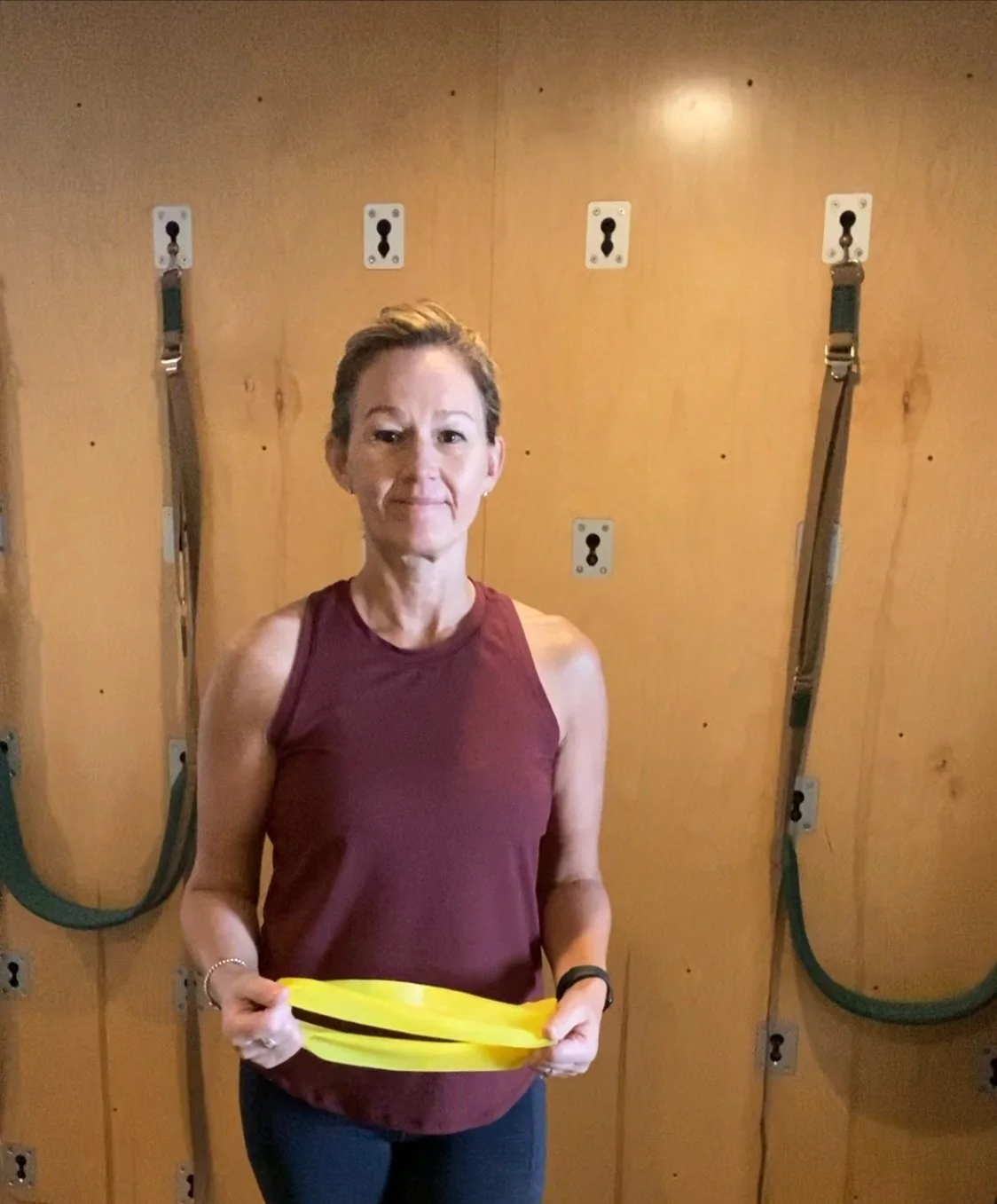
Shoulder Stability exercises using a light to medium weight looped resistance band. Give it a try!